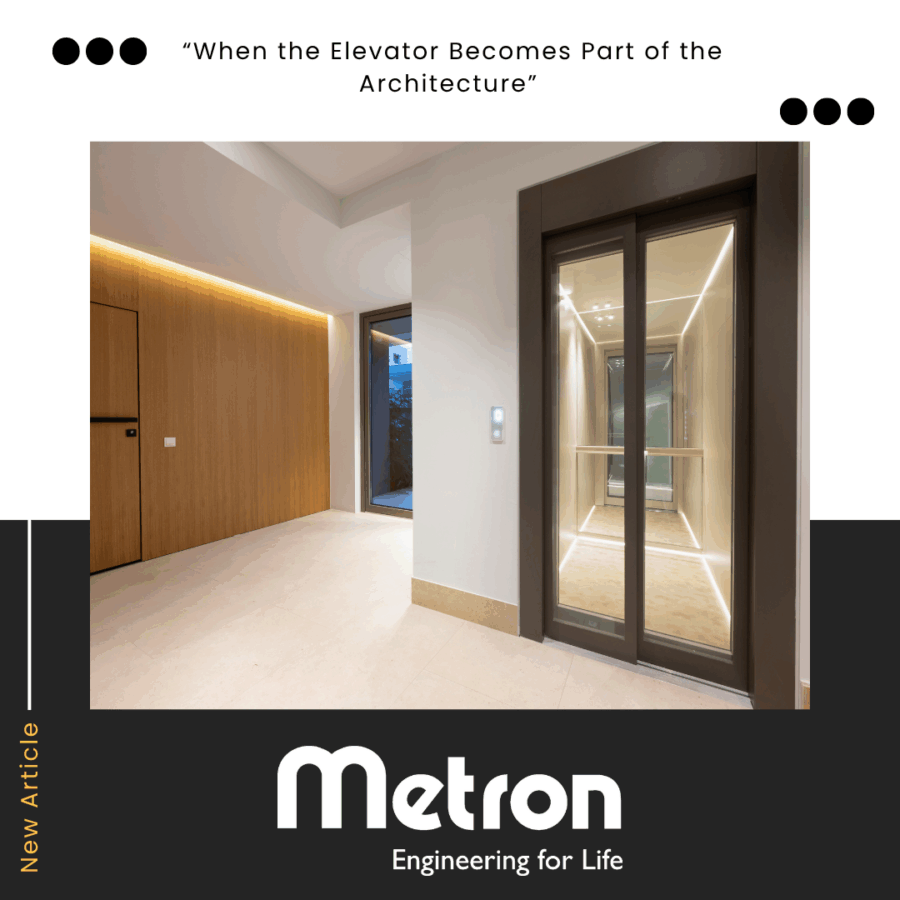
When the Elevator Becomes Part of the Architecture
From Functional System to a Core Element of Experience and Identity
For decades, the elevator was the “silent protagonist” of buildings. Α necessary technical system, typically introduced at the final stage of a project, once all other decisions had already been made. Its role was simple: to function efficiently, fit within the available space, and remain unnoticed.
Today, this approach belongs to the past. Contemporary architecture no longer designs just spaces, it designs experiences. Every element tells a story, and vertical transportation is an integral part of that narrative. The elevator is often the first point of contact with a building and, at the same time, the last impression a user carries when leaving.
It is no longer just a means of transport. It is a defining element of the architectural experience.
The Experience of Movement Within the Building
Vertical movement deeply shapes how we perceive and experience a space:
- how we understand and interpret the environment
- how movement flows naturally throughout the building
- the overall aesthetic experience of the user
The elevator functions as a transitional space, a brief yet defining moment where users engage directly with design, colours, materials, and light, all of which shape how they feel within the space.
Design Within Real Constraints
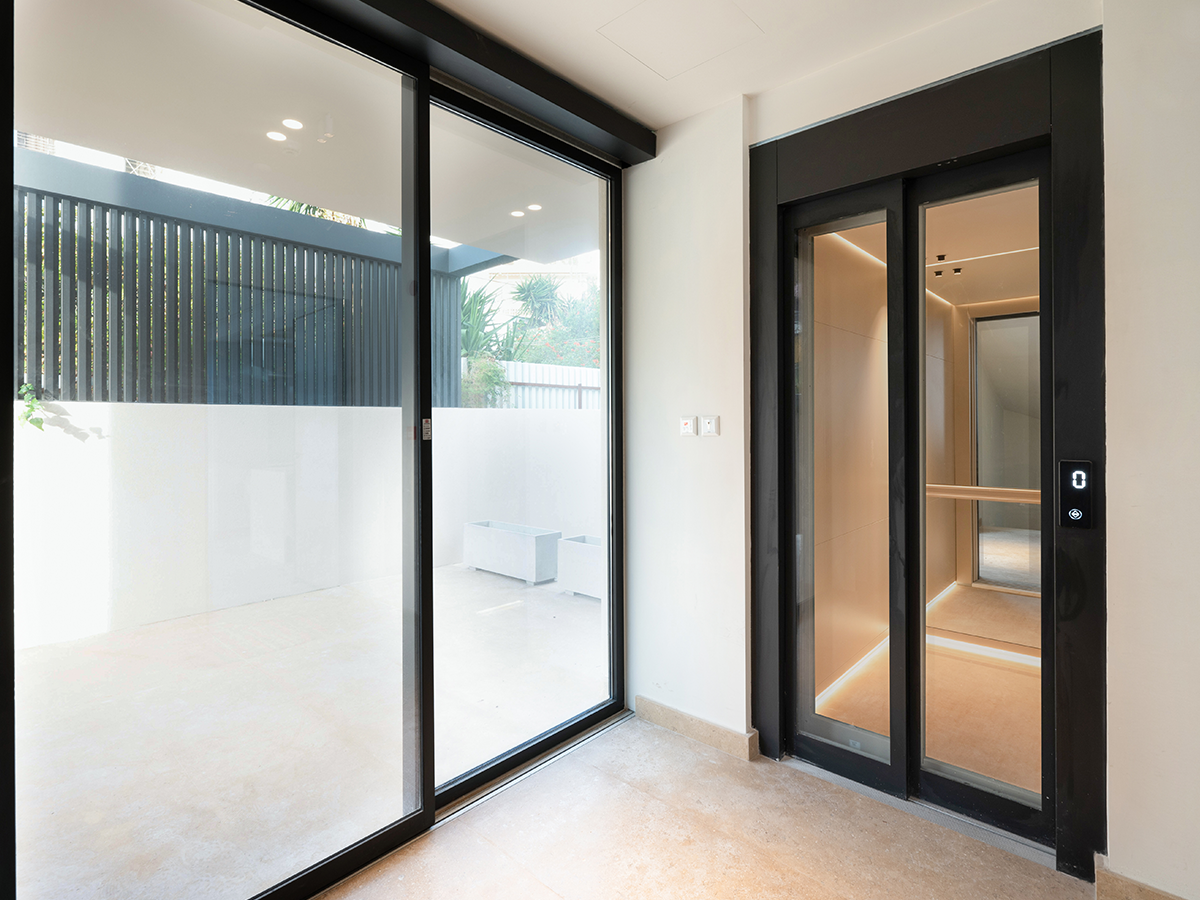
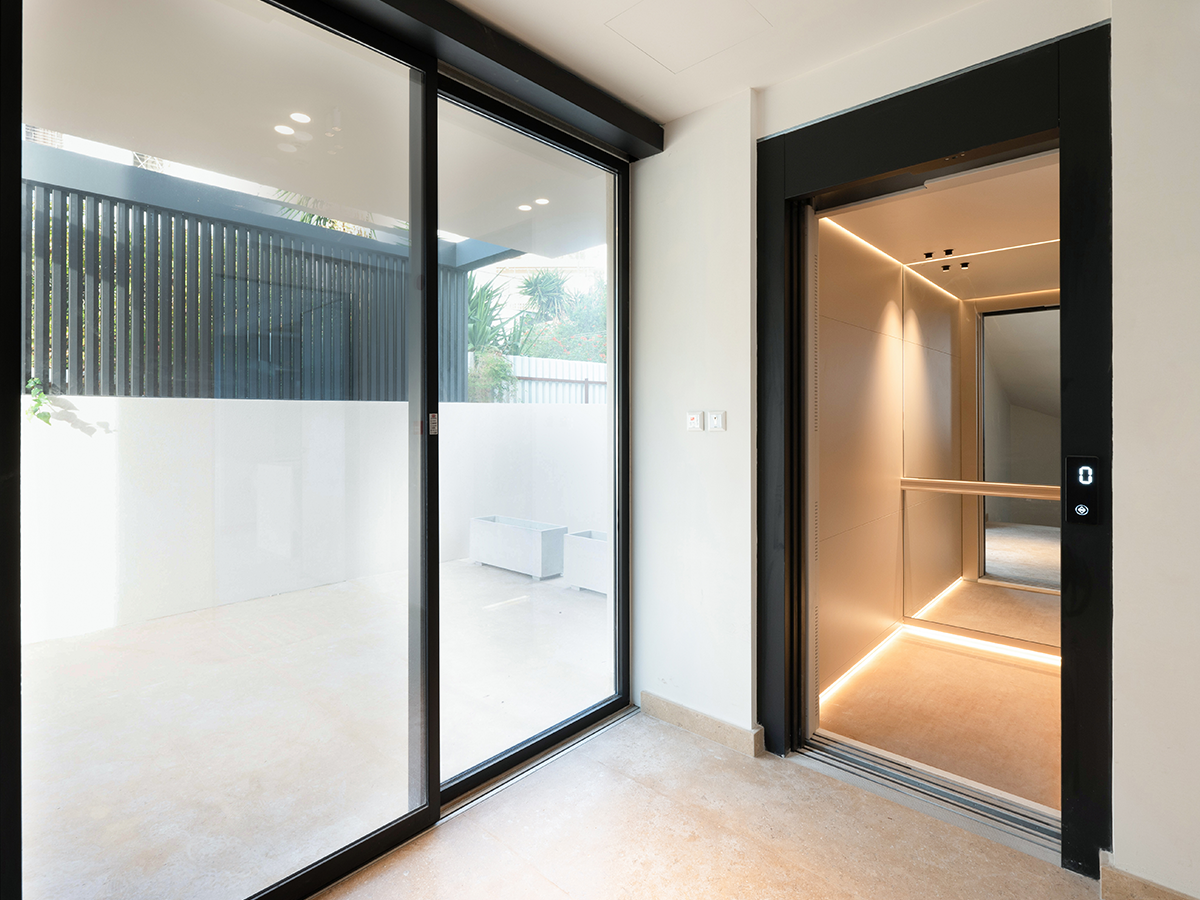
Existing buildings in need of new life. Renovations with strict limitations. Narrow shafts. Reduced headroom. At the same time, increasing demands for accessibility, safety, and compliance.
These constraints do not eliminate design. They redefine it.
Aesthetics do not come afterward but they are born together with the solution.
The success of a project depends on how these two elements coexist from the very beginning, and how constraints are transformed into creative opportunities. This is exactly where vertical transportation becomes critical.
The Elevator as a Design Tool
When the elevator is integrated early in the architectural process, its role shifts. It is no longer just a technical detail as it becomes a tool of composition.
It can:
- define the geometry of the building
- act as a vertical axis of movement
- connect different levels both visually and functionally
- enhance the overall spatial experience
The choice of elevator type, shaft configuration, and doors is not a minor technical decision. It directly influences proportions, textures, clean lines, and the overall perception of space.
Materials, Light and Colour: Small Decisions, Big Impact
The experience of vertical movement is shaped by details that may go unnoticed during the design phase but become highly perceptible in use:
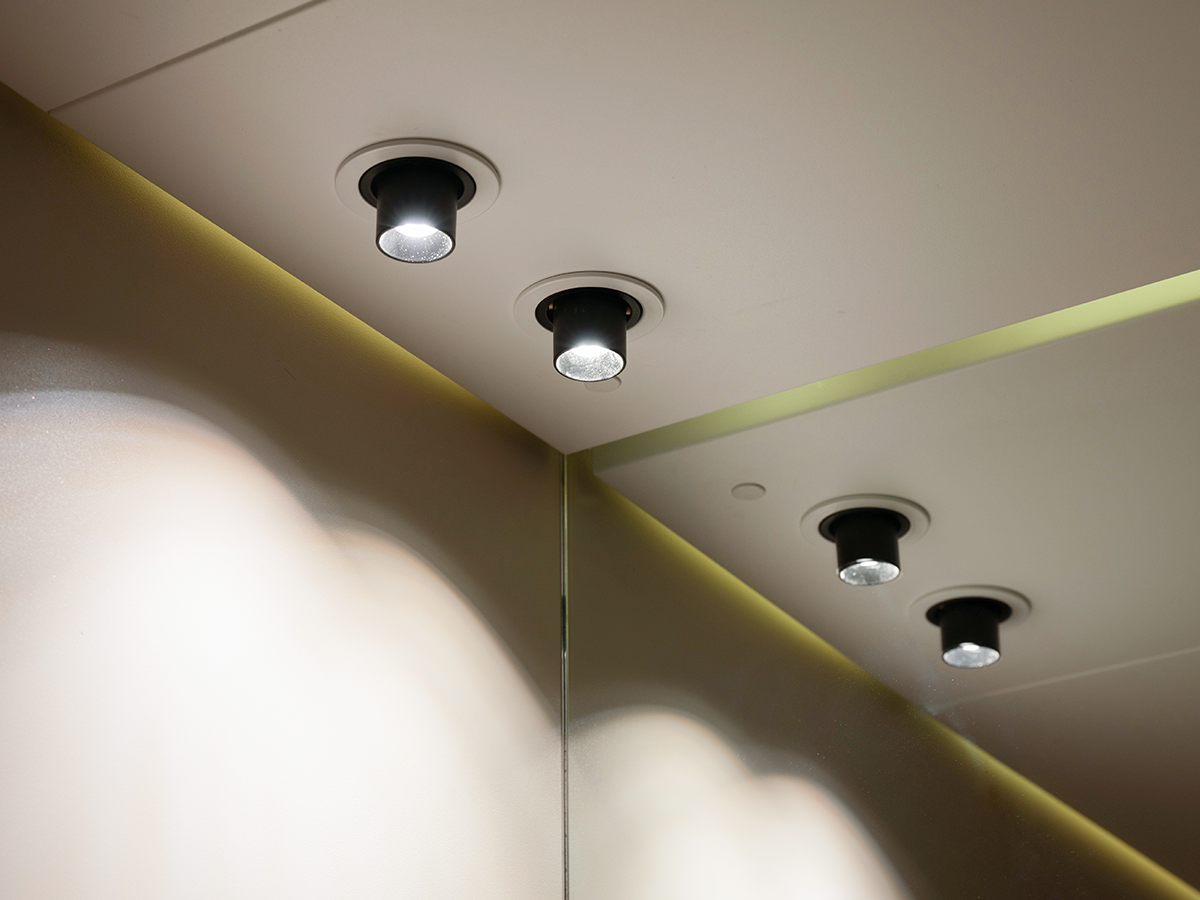
- how light reflects on surfaces
- textures that create a sense of depth or lightness
- colour palettes that interact with surrounding shared spaces
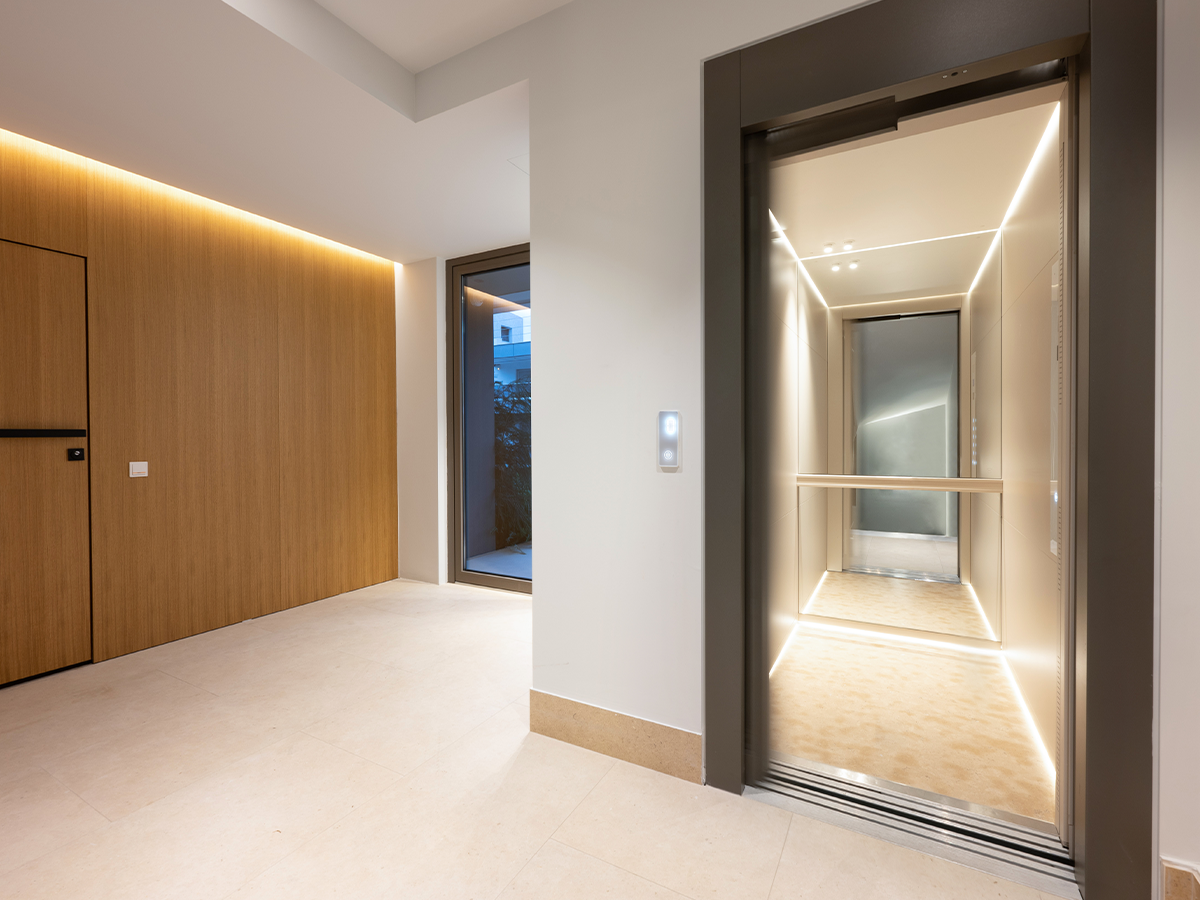
When these elements are selected with consistency, the elevator does not stand out but it becomes fully integrated into the identity of the space.
Transparency in Contemporary Design
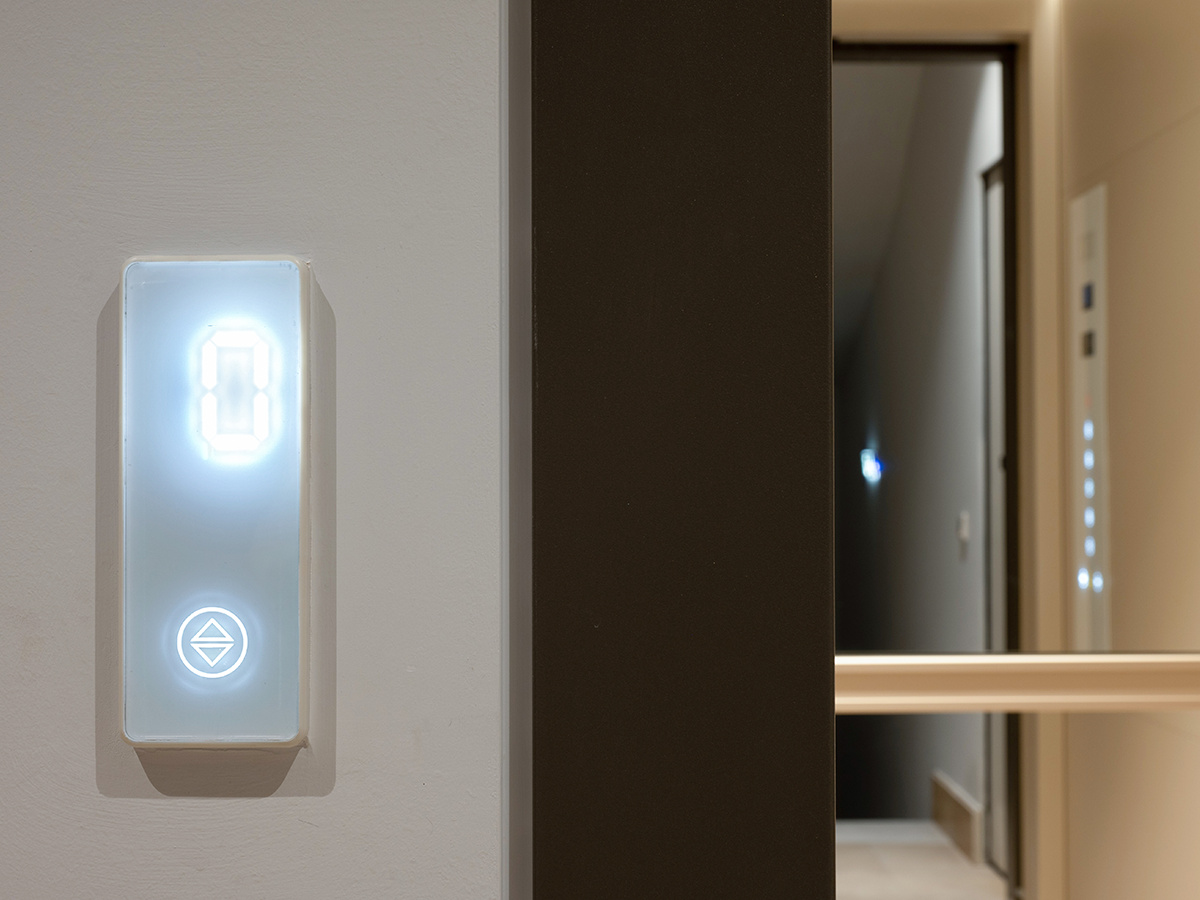
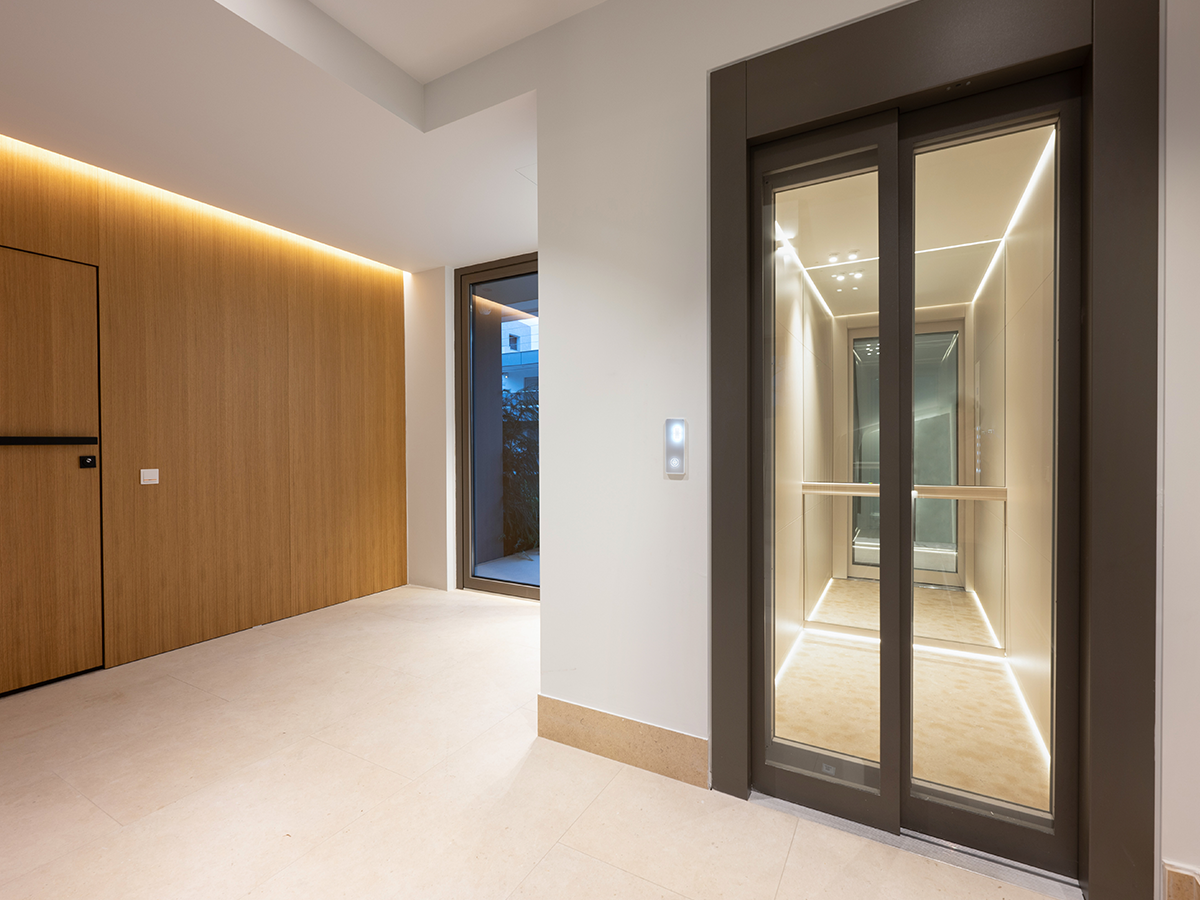
In many modern applications, particularly in renovations and urban environments, transparency plays a decisive role. Structures that allow natural light to pass through, lines that do not add visual weight to the building’s volume, and solutions that respect the existing architectural context.
Vertical circulation can contribute to this minimal aesthetic when it is treated as part of the architectural composition rather than an added element.
An Aesthetic that Respects Safety
The true quality of a project is reflected in how it combines aesthetics with everyday use and how it stands the test of time. Safety and accessibility should not compromise the character of a space, but instead be naturally integrated into it.
When design is human-centered, regulations serve as a framework rather than a limitation. The result is spaces that remain functional, welcoming, and timeless.
The Architect as the Director of Experience
The modern architect is not simply called to design facades and floor plans or merely to “place” an elevator. They are called to design journeys and experiences as the way a person moves, stops, waits, ascends, and descends.
Vertical mobility is part of this direction. When it is treated with the same level of care as all other spaces, the building gains coherence, rhythm, and character.
The elevator is no longer just a means of transport, but a transition space, an experience point, and an architectural tool.
In a world where buildings are becoming more complex and requirements are increasing, quality is not found in excess. It lies in the balance between design, functionality, and the way people experience space.
Metron’s Design Philosophy
For Metron, design is not simply a superficial addition. It is an integral part of the solution.
The goal is not to impose a specific style, but to provide:
- tools that support the architectural vision
- solutions that adapt to the project
- consistency and reliability over time
Architectural freedom is strengthened when design is clear, transparent, and dependable.