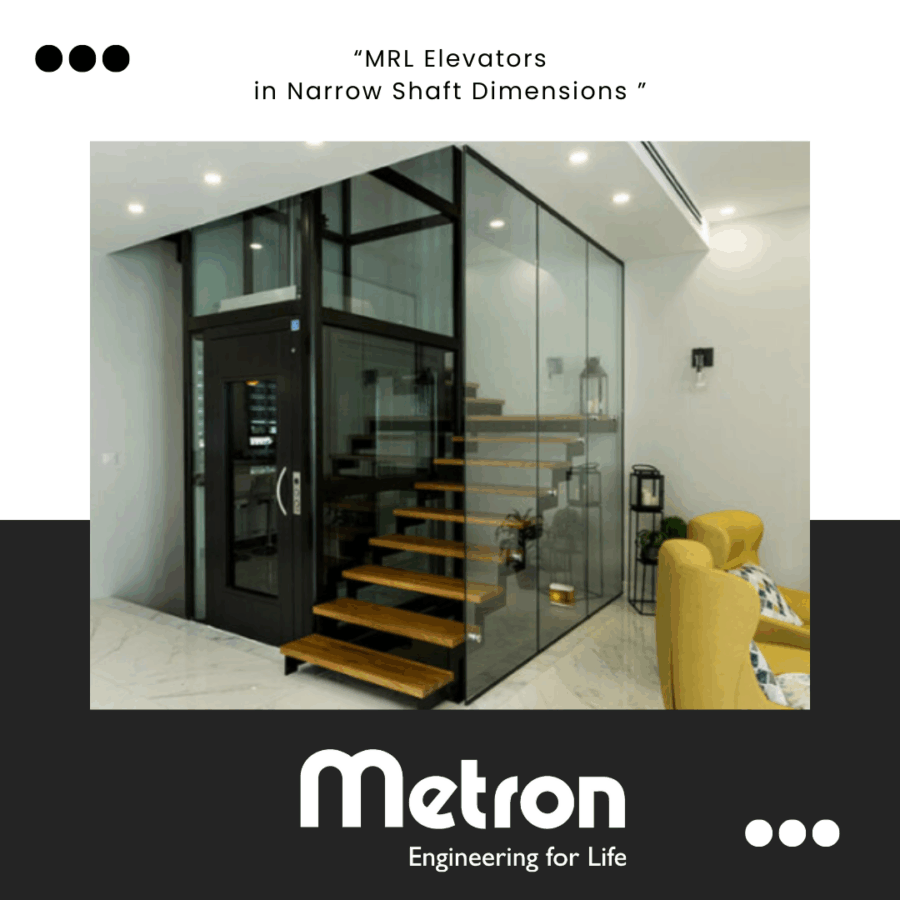
MRL Elevators in Narrow Shaft Dimensions
When proper design makes the difference
The everyday challenge of modern projects
In today’s construction reality, “ideal” shafts are the exception rather than the rule. Existing buildings, renovations, changes of use, and architectural constraints create an environment where engineers are required to design solutions within limited available space.
MRL elevators are often seen as the obvious choice. However, in narrow shafts, choosing an MRL solution is not, by itself, the answer. It is simply the starting point of a complex technical process.
What does “narrow shaft dimensions” really mean?
In practice, a narrow shaft is not defined solely by plan dimensions. It usually involves a combination of factors such as:
- Low pit depth
- Low headroom
- Structural elements that restrict safety clearances
- Difficult access for installation and maintenance
Very often, the biggest challenge is not what appears on the drawings, but what is revealed during installation where theoretical clearances that seemed acceptable on paper collide with on-site reality.
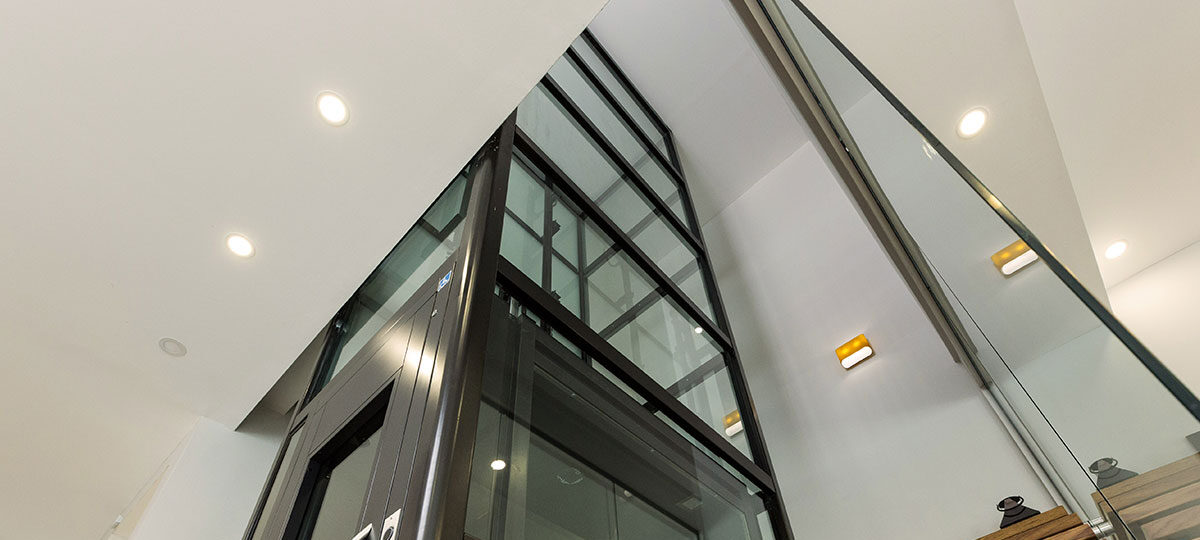
Regulations: when EN 81-21 becomes a design tool
The EN 81-21 standard was developed to address elevators in shafts with low headroom or limited dimensions. Not as a “less strict” standard, but as a framework for safe adaptation to existing buildings.
In practice, applying EN 81-21 ensures:
- Adequate refuge spaces
- Clearly defined protection zones
- Safe access to safety components
- Documented technical solutions and safety systems and not improvised fixes
Designing an MRL elevator for a narrow shaft starts with a deep understanding of regulations, not simply with the effort to “make everything fit.” This is precisely the difference between an MRL elevator that merely fits and one that is genuinely safe and reliable.
MRL does not simply mean “machine-room-less”
One of the most common misconceptions is that an MRL elevator automatically solves all space-related problems. In reality:
- The machine is installed inside the shaft
- Strict access requirements to control and safety points still apply
- Safety clearances remain critically important
Another frequent mistake is treating the shaft as a static “box,” without considering:
- The vertical movement of the cabin
- Safe access requirements for maintenance
- Refuge spaces and protection zones in case of failure
In narrow shafts, MRL design must be holistic. Every component, every fixing point, and every cable route directly affects safety and installation ergonomics.
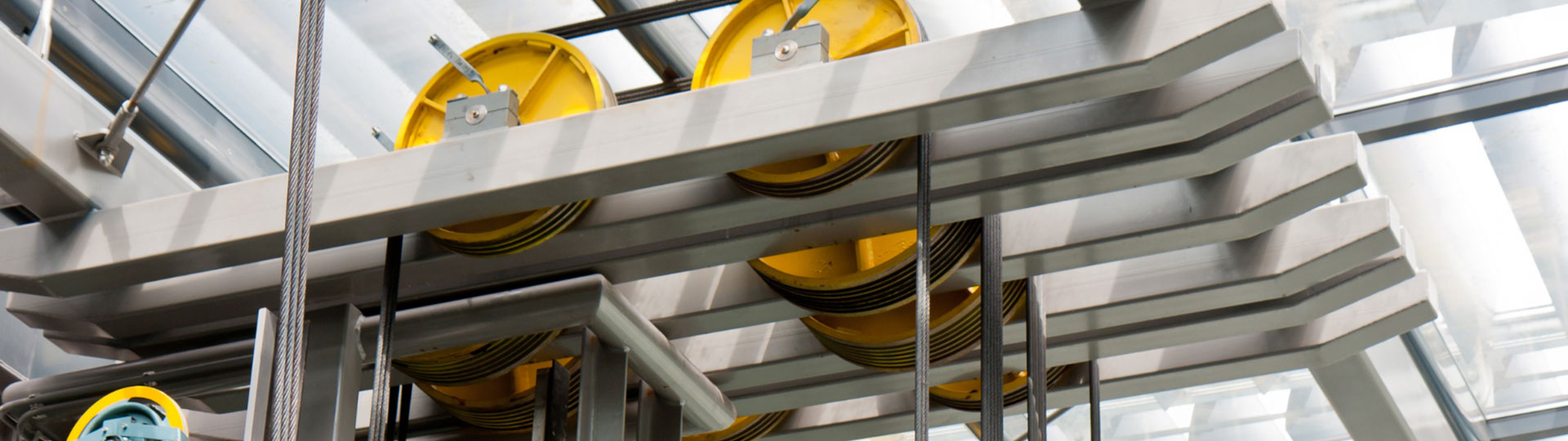
The role of compact architecture
In narrow shafts, component selection and installation geometry are decisive. Compact gearless machines and solutions that allow fixation on a single shaft wall can save critical centimeters provided they are properly integrated into the overall system.
The modern approach is not about “compressing” components, but about rational simplification, such as:
- Eliminating the machine room entirely
- Faster and easier installation
- Fewer, clearly defined fixing points
- Compact, high-efficiency gearless machines
- Clean, well-defined geometries
Particular importance is given to single-wall fixation, where feasible, as it simplifies installation and increases usable shaft space, often allowing for larger cabin dimensions
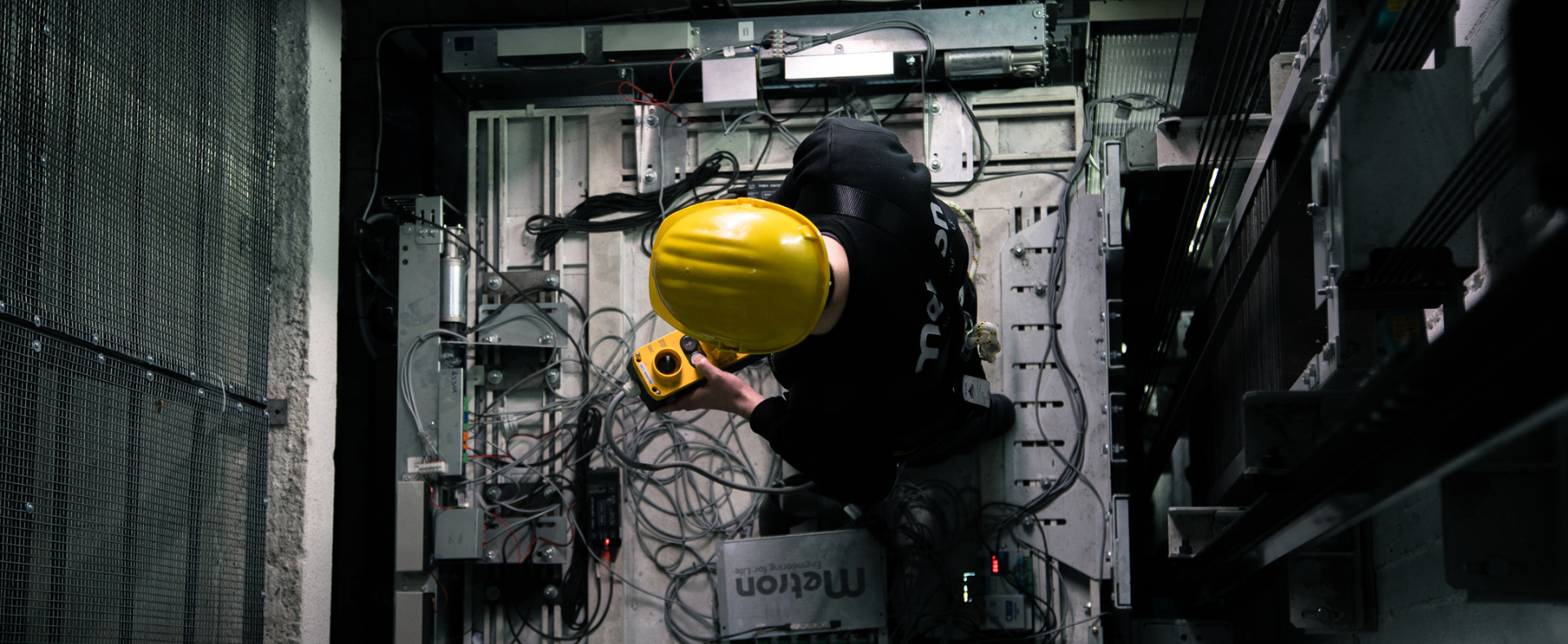
Ride quality in narrow space
In limited spaces, ride quality becomes a matter of functional safety, not just comfort. Gearless motors combined with precise control systems provide:
- Smooth start and stop
- Controlled acceleration and deceleration
- Reduced vibrations
- Lower mechanical stress
- Accurate floor leveling
Precise leveling is especially critical in buildings with high accessibility requirements or intensive daily use, as it directly affects:
- Accessibility
- Safe boarding and alighting
- Proper door operation
In narrow shafts, where tolerances are minimal, even small deviations have amplified consequences.
Installer-centered design: a critical factor often overlooked
The more narrow the installation space, the greater the importance of the human factor. Even the best technical design can be undermined by a difficult installation process. Limited visibility and access increase the risk of human error.
That is why modern MRL design must explicitly address installer needs. A well-designed MRL elevator should:
- Define clear component positions and cable routes
- Minimize the need for on-site improvisation
- Guide the installation process
- Reduce handling in hazardous areas
- Increase the overall level of safety
Fewer on-site decisions mean higher safety in the final result. Experience also shows that installer-focused design significantly benefits long-term maintenance.

Design today, safety for decades
Choosing an MRL elevator for a narrow shaft is not a simple decision. It requires:
- Deep regulatory knowledge
- A true engineering mindset
- Solutions designed for real-world conditions
An MRL elevator in a narrow shaft is a system expected to operate reliably for decades. Every design decision directly impacts:
- Reliability
- Maintainability
- Long-term safety
A narrow shaft is not an obstacle when addressed correctly from the start. It is simply another engineering challenge where safety, reliability, and build quality must remain non-negotiable.